
Galaxy Europe at the DARIAH Annual Event
Explording Reproducible Workflows in the Arts and Humanities
On this page
All Roads Lead to Rome: Galaxy at the DARIAH Annual Event
There is something uniquely inspiring about gathering in Rome—a city that is itself a living archive of human history—to discuss the future of the Digital Humanities. The Galaxy Freiburg Team recently had the pleasure of attending the annual DARIAH meeting in Rome to do just that.
What is DARIAH?
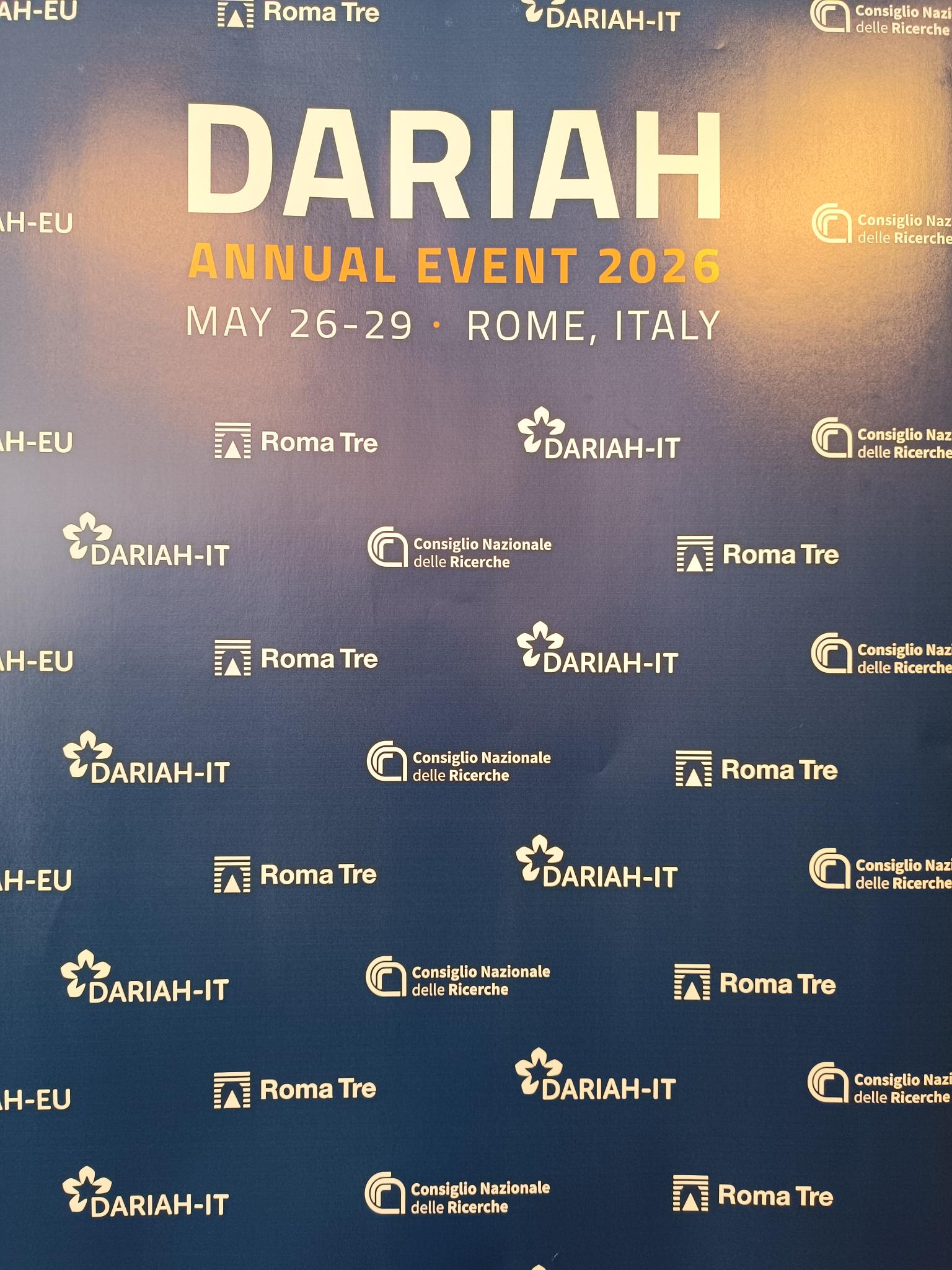
The Digital Research Infrastructure for the Arts and Humanities (DARIAH) is a powerhouse network that supports digitally enabled research and teaching across Europe for the Arts and Humanities. More than just a technical resource, DARIAH is a vast network of expertise, tools, and knowledge. But most of all, we experienced DARIAH as a vibrant and incredibly welcoming community. Its mission is to develop and operate the infrastructure necessary to help scholars build, analyse, and interpret digital resources. Once a year, they host an annual meeting, this time in Rome, focusing on the topic: “Digital Arts and Humanities With and For Society: Building Infrastructures of Engagement”.
Infrastructures of Engagement
Since Galaxy understands itself as an infrastructure of engagement as well, we were happy to participate in the panel titled: “Applied AI and Reproducible Workflows: Sustainable Infrastructures for Public Knowledge.” In an international team comprising contributors from DARIAH-EU, the University of Alicante, and the CNR, Istituto dell’Opera del Vocabolario Italiano, our presentation focused on a critical challenge in the Digital Humanities: Reproducibility. While narrative workflows (which describe the “how” and “why” of a project) are becoming more common thanks to initiatives like the Social Sciences and Humanities Open Marketplace (SSHOC), there is still a significant gap when it comes to making those workflows actionable.
The Challenge
Writing a workflow is often iterative, time-consuming, and lacks clear academic incentives. Many researchers struggle to adapt a workflow developed for one dataset to another, meaning that publicly funded research often remains static rather than becoming a building block for others.
The Solution: Moving Toward Composability
The collaborative presentation, Actionable Workflows: Infrastructures Enabling Collaborative, Reproducible and Sustainable Research, argued that the path forward lies in “composability”—the ability to combine modular components into flexible, reconfigurable systems. And exemplified the idea with two different examples:
-
AEON: Developed by DARIAH-IT, a Low Code / No Code platform that federates various European infrastructures. It automates the “FAIRification” of digital collections, turning heterogeneous data into interoperable knowledge bases.
-
Galaxy: The data analysis platform allows researchers to create and execute reproducible workflows without needing to write code, supports High-Performance Computing (HPC), and meticulously tracks every analytical step. In the context of an OSCARS project, Galaxy was used to reproduce complex OCR-based workflows for analysing historical newspapers.
Closing the “Last Mile”
The core message of our presentation was that DARIAH is uniquely positioned to bridge the “last mile” between complex technical infrastructures and the research communities in the arts and humanities that need them.
By testing and guiding the adoption of actionable workflows, we can transform infrastructures from mere collections of services into truly collaborative research platforms. When we make research reproducible and transparent, we increase the social value of our work and empower scholars across the globe to build upon each other’s discoveries.
We left Rome feeling energised and inspired. A huge thank you to our collaborators and the DARIAH community for a warm welcome and the many fruitful discussions. Here’s to a future of open, reproducible, and collaborative research in the arts and humanities!